Monday, July 5, 2010

Dominica Accommodation - Geotourism on the Nature Island

It strikes every visitor at once on arrival---a place where humanity and its impact come a poor second to the all consuming power of the natural world. The sheer profundity of the vegetation is hard to assimilate at first, such is the overwhelming effect as narrow strips of tarmac road vie for a presence amid the greenery. Pavements are non existent in rural areas and not for nothing is Dominica the self styled “nature island”. Even Columbus and his crew were taken aback one fair Sunday morn in November 1493 when their ship hoved to through a misty dawn on the eastern seaboard. Landfall was impossible on this rugged coastline and the seamen gazed in awe at the prospect before them. Not much has changed in over 500 years. Only rarely does an island stand alone in the magisterial grandeur of its landscape, and Dominica can lay claim to the most arresting mountain panoramas in the eastern Caribbean. The Morne Trois Pitons National Park was rightly accorded World Heritage Site status by Unesco in 1997.

Topography has defined its singular stance in modern day tourism too, with beach life and the regulation holidaymaker a rare commodity indeed. Instead, the hiker, whalewatcher and birder rule the roost with world class diving another major draw. Recently, community based tourism has gained strength in the wake of native New Yorker Anne Baptiste’s laudable ethos from half a century ago when setting up the Papillote Wilderness Retreat. Her seven rooms sit in two hectares of lovingly tended gardens replete with hot springs, waterfalls and a top class creole restaurant where she’s employed generations of villagers from Trafalgar in the Roseau Valley. Perhaps they should call her the Godmother of Geotourism, the buzzword that defines tourism that sustains or enhances the geographical character of a place—its environment, heritage, aesthetics, culture and the wellbeing of its residents.

Fae and Atherton Martin of Exotica Cottages on a ridge 1400 feet above the capital Roseau have developed the theme in latter years, combining health and wellness, local agriculture, flower growing, traditional music and cooking demonstrations in their hugely successful Community Gardens Culinary Tour which embraces the skills of local villagers from Giraudel and Eggleston. Fourth in National Geographic’s Geotourism Awards in 2008, they’re now hoping to enlist Greenpeace in marketing the concept while Dominica is also set to host the inaugural Green Investment Conference in early October. The location for this is the remarkable wild forested mountainside development at Jungle Bay in the far south east near Delices, the brainchild of environmental activist and visionary Sam Raphael. Dominica is in the vanguard of forward thinking, sustainable development in the Caribbean and this major gathering of concerned individuals will hopefully drive the necessary implementation programme.

For more information, please see the Definitive Caribbean Guide to Accommodation on Dominica.

Monday, June 28, 2010

Carriacou Regatta 2010, 25th July – 2nd August

No island in the region can cherish its links to the sea more than Carriacou, the southernmost of the Grenadine chain twenty miles north of Grenada. Known as the Land of Reefs by the original Amerindians, it has a strong Scottish and Irish heritage and seafaring is in the blood. The building of traditional timber sloops is undergoing something of a renaissance too and Carriacou’s hugely anticipated Regatta is due to celebrate its 45th anniversary from July 31st over the Emancipation holiday weekend.

It’s developed into a popular event drawing sailors and visitors alike from Grenada, Tobago, Canouan, Union, Martinique, St Vincent and from as far north as Antigua in a raucous festival of seamanship and good natured bonhomie. Inaugurated by Jamaican John Linton Riggs, to help stimulate the boat building trade, his large workboat the Mermaid, constructed by master shipwright Zepherine McLauren, once won seven regattas on the trot. These sturdy workboats remain the focal point today and are raced in four different classes up to 35 feet in length.

Other sporting and cultural events take place on land and fierce competition is the order of the day. There may even be the odd flagon of Jack Iron rum consumed. For more information do call 443 7930 or 7948 or email on ccouregatta@spiceisle.com.

Monday, June 21, 2010

Help Us Update Our Guides to Trinidad and Dominica

Our roving reporter, Stephen Thorpe, is currently winging his way around Trinidad and Dominica in search of the best places to stay, Dominica activities and details about Trinidad.

We would love you to comment on what you think we should be looking at. Where are the coolest hang outs? Where should we go for Trinidad birding? Who offers the best sailing, scuba and spa services on the islands?

Steve has a knack for finding hidden gems and is very keen on ecotourism in Dominica and responsible travel…do you have any recommendations?

Leave us your thoughts below and we’ll check them out!

Dominica Island Guide

Thank you!
The Definitive Caribbean Travel Guide

Monday, June 14, 2010

Cricket - Lovely Cricket in the Caribbean

Ah, Cricket lovely cricket. West Indies are embroiled in a three Test series against a strong South African side at present and nothing so far suggests they’re about to upset the form book. Time was, and it’s not that long ago, when a home Caribbean Test series was really something to relish, a time for rejoicing with a battery of truly great players on view, the stands packed to overflowing and rocking to the sweet sounds of pan, soca and conch as the Windies coasted to yet another resounding victory.

No more though, O dear, whatever happened to those halcyon days of yore. It’s a long story, and too complicated to relate here, but suffice it to say the men in maroon have been in apparently terminal decline now for well over a decade now. Just when it seems things cannot get any worse.... they do. This just concluded opening Test in Port of Spain was actually switched from Kingston after the social unrest there, a reminder, if any were needed, that matters beyond the boundary are no bed of roses either.

Before this last game, West Indies had won and lost 152 matches in their history so defeat by 163 runs means their win-loss ratio dips below 1 for the first time since 1976. It’s a measure certainly of how far they’ve sunk and, with cricket still seen as the region’s main unifying force, the lack of success is felt far and wide. The greatest of games is still a passion, nay a religion among the older brethren around the islands, and the pain runs deep. This latest reverse comes hard on a 5-0 whitewash in the preceding one day internationals where tiny Dominica at least enhanced its growing reputation on the world stage by successfully hosting its first ever back to back internationals in the recently constructed stadium in Roseau.

There were decent turn-outs too, and Dominica’s profile was raised further when their 26 year old offspinner Shane Shillingford made his Test debut in Port Of Spain. Miracles do sometimes happen so if you fancy watching West Indies turning this series around then venture along to the wonderful Warner Park ground in Basseterre, St Kitts on 18th June then to the “Mecca” of Kensington Oval Barbados from June 26th for the third and final Test. Just don’t bank on any change of fortune.

For more information, please see the Definitive Caribbean Guide to Cricket.

Tuesday, June 8, 2010

Barbados and Grenada Win Gold at The Chelsea Flower Show 2010

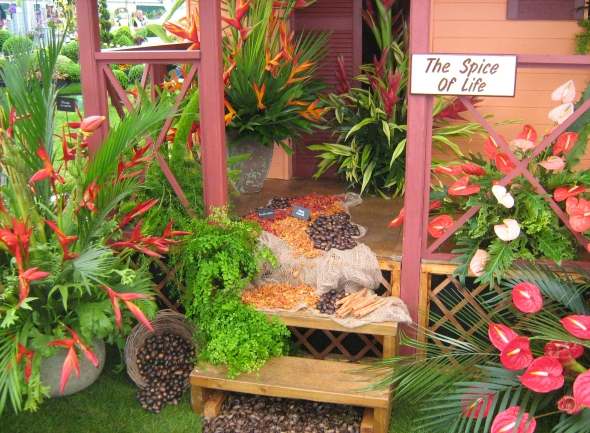
Bloomin marvellous! Barbados and Grenada’s twin gold medals at the recently concluded Chelsea Flower Show were testimony to the rich horticultural heritage in both countries and the dedicated individuals who have nurtured its growth. Barbados’ winning exhibit “Sugar Factory Ruins Reclaimed by Nature” which was designed by acclaimed artist Arthur Atkinson, was its 14th gold in the last twenty one years and was achieved amid 600 competitors from every corner of the globe.

For over half a century Iris Bannochie’s Andromeda Gardens was the flagship destination on any east coast island tour but horticulture is now a boom industry in Bim with COW Williams’ Canefield Plantation site in St. Thomas supplying anthuriums, ginger lilies and heliconias on a commercial scale, many of which were on display at Chelsea. Orchid World in St. George has over 20,000 specimens on view too while Hunte’s gardens, a former sugar plantation, and Flower Forest in St. Joseph are also well worth a visit.

Grenada is no less arresting for the flower enthusiast, and driving around you cannot fail to be assailed by the aromatic whiff of spices at every turn, from nutmeg to pimento, which only thrives in Jamaica elsewhere in the Caribbean. If that isn’t enough of a sensory overload then try some of the fruit of the cocoa tree which is rapidly establishing itself on a far wider scale here. From a small cottage industry started just over a decade ago using ancient machinery deep in the country, the Grenada Chocolate Company has suddenly gained a burgeoning international reputation. It’s purely organic for one thing, and fair trade, only problem is the demand often outstrips supply. And why not, it’s smooth, utterly divine, unlike anything you’ve ever tasted, guaranteed....... and usually unobtainable. Americans purchase it by the suitcase (big ones), damn them, and on my last visit there was none to be had at the airport either.

Like the flowers, shrubs and spices, it reflects the wonderful growing conditions of the rich volcanic soil. Oils, organic soap and cosmetics are another valuable by-product and for the green fingered Grenada is truly a place to savour. Caribbean Horizons run dedicated garden tours to places like Sunnyside, Bay Gardens, The Tower, Joydon and Balthazar estate. Take time out there if you can. Oh...... and some advice for the Chocolate Company...... set up a stall at the Flower Show next year lads you could sell us a few bars there for sure. Unless the Yanks got there first.

For advice on other things to do around Barbados and Grenada and where to stay, please see:
The Definitive Caribbean Guide to Barbados and
The Definitive Caribbean Guide to Grenada.

Tuesday, June 1, 2010

Coke, Golding and ‘Politricks’ in Kingston, Jamaica ain’t all bad!

Something topical this week – the news from Kingston, Jamaica is alarming but would you have a clue it was happening if you were in the Blue Mountains, Negril or Montego Bay? We read the views of specialist Caribbean writer Stephen Thorpe, who has been writing about the Caribbean in the UK national press, magazines and international publications for over 25 years.


It’s certainly unusual these days for the Caribbean to feature on primetime and international news bulletins—so when it does, we sit up and take notice. The news out of Jamaica recently however has not made for good reading, or watching for that matter, but it’s important we retain some perspective on the matter. The problems besetting the downtown areas of the capital Kingston are multi-facetted, socially complex and rooted in political machination and corruption spanning more than four decades, a long term cancer at the heart of society. Jamaica is arguably the most arresting, visually inspiring and creative country in the entire region with 99% of its population warm and welcoming, and a sporting pedigree globally unparalleled for its size yet since Independence in 1962 it has been seriously under served by its politicians.

Last week’s horrendous scenes emanating from Tivoli Gardens have scarred Jamaica’s international image once again but this time, whisper it, there may be some sort of positive repercussions. It never rains but it pours—the hurricane season starts on June 2 with a forecast, as ever, for more frequent storm passages too. Ah, Tivoli Gardens. Sounds like some Italianate Eden, replete with fountains and blooming bougainvillea. Er...... no, far from it, it’s a sweltering concrete slum and shanty area housing thousands, abutting nearby Trenchtown, Jones Town and Rema where conditions are no less harsh. No need to rake over the grizzly details, but large swathes of west Kingston are controlled as lawless fiefdoms by drug barons and gun runners, the garrison “dons”, one of whom Christopher “Dudus” Coke, was summoned for extradition by the US back in October.

Prime Minister Bruce Golding of the Jamaica Labour Party and constituent member for Tivoli resisted it, but finally relented unleashing a street war when the residents blockaded the area against government forces and police seeking Coke. He has still not been located. If history repeats itself (and let’s hope it doesn’t) standby for more inevitable unrest. In 1992 Coke’s father, Lester, aka Jim Brown, died in a mysterious fire in prison the day before he was due to be extradited. Your correspondent witnessed the funeral: at the head of the cortege was Edward Seaga, one of Golding’s JLP predecessors as Prime Minister. Draw your own conclusions.

In the 1970’s Seaga opposed Michael Manley’s Peoples National Party which was supposedly aligned with Marxism and Castro’s Cuba and not to the liking of the United States. Guns flooded in from the north setting the tone for present day street culture; even now there are downtown walls smeared with old graffiti from that time: “CIAga Land, Keep Out”. Got to hand it to Jamaicans for retaining their sense of humour in parlous times. The common man refers to “politricks” and “politricians”, and not without good cause. As a former long term Kingston resident I trod carefully in those downtown enclaves, meeting remarkable people like Pastor Bobby Wilmot and Lorna Stanley who gave up a successful 30 year career in Washington journalism to return and offer succour and advice to the “sufferahs” of Trenchtown. These and other brave people like them are undeniably the true warriors of social conscience, not those now supposedly leading the country.

So, what does the future hold for the benighted Land Of Jah ? For the first time in years the police have a presence in Tivoli, so that’s a departure of sorts. And what about prospective travellers, the two million visitors per year, the lifeblood of the tourist industry? Kingston and St.Andrew is still under a state of emergency but at Moondance, Rockhouse and Tensing Pen in sultry Negril, the vibe is unaffected; indeed in every coastal resort, from Jake's and the unspoiled rural backwater of St.Elizabeth in the south to Strawberry Hill and the dreamy Blue Mountains life goes on as normal. The word must still be: go, and savour the upliftment.

For information about where to stay and what to do in Jamaica, have a look at The Definitive Caribbean Guide to Jamaica.

Definitive Caribbean says, fly into Montego Bay and from there choose from a number of other worthy places to stay, where the troubles in Kingston will seem a world away: Coyaba Beach Resort, Country Beach Cottages, Half Moon Club, Jackie's on the Reef, Round Hill Hotel and Villas, Moon Dance Cliffs Resort and Spa, The Caves and villas through Linda Smith Villas and Villa Vacation.

Tuesday, May 25, 2010

Land of the Living - Nevis Animals and Sea Life

Here is the sixth installment of articles in memory of Jim Johnson (www.WalkNevis.com) who died tragically on Nevis recently. We are re-publishing a series of his articles over the coming weeks. Each one gives a fascinating insight into the man, his love of Nevis and his infinite knowledge of natural life on this beautiful Caribbean island.


While Nevis is quiet and relaxed, with our gentle breezes and calm waters, we are very much alive and could be easily referred to as the Land of the Living! Nevis is packed and full of life, it is just not of a really loud and vocal nature!

Those long sandy beaches and rolling waves have a wide range of coastal and sea life. Ghost crabs hide in the sand and scurry into the waves to lay their eggs. Cockles bury themselves in the tidal zone. Coral reefs harbour thousands of types of fish, shell creatures, sponges, and sea fans as well as crabs, lobsters, octipi and baby turtles.

Overhead, quietly soaring around is a wide variety of coastal birds. Terns don’t fuss as much as gulls and you will rarely hear a squawk for our pelicans. The magnificent Frigatebirds look like small Pterodactyls, but say little.

Inland there are hummingbirds, banana quits, flycatchers and much more, but mostly active at dawn and dusk and even then not too loud. Also fluttering around with the birdlife are brightly coloured butterflies, moths, and beetles, none of which make a sound. They help our beautiful flowers and plants reproduce another wide category of life on Nevis.

Our noisy neighbours? Check out the frogs at night, that is the mating call of the males saying “Honey, I’m available”. Egrets and monkeys can sometimes be heard making guttural noises as the look for food and argue who is in charge. And then there are donkeys, scare a donkey and you will hear about it for at least five minutes (so just don’t scare them)!

Nevis is very much alive, just quietly going about it.

For more information please see our Definitive Caribbean Guide to Nevis.

Monday, May 17, 2010

Talking Tiny - The National Flower of Nevis

Here is the fifth installment of articles in memory of Jim Johnson (www.WalkNevis.com) who died tragically on Nevis recently. We are re-publishing a series of his articles over the coming weeks. Each one gives a fascinating insight into the man, his love of Nevis and his infinite knowledge of natural life on this beautiful Caribbean island.


The hotels and private homes have some really beautiful flowers that are big and showy. The “National Flower” of the Federation is a large spreading tree that towers 30 feet tall! One of our wild flowers has a single bud that is over 12 inches (30 cm) tall. But the bulk of flora and fauna is not quite so big and showy, look closely and see the small!

Look at the wild areas alongside our roads, it is filled with numerous tiny white, yellow, red and even blue flowers! Blue Rain Eyes peep out after an afternoon shower. Pink Paint Brushes hide in the weeds (they often are the weeds) and mix with multicoloured lantanas.

Then there are the flowers that try to look big, but aren’t. Bougainvillea flowers form shrubs and Poinsettias tower like trees at Golden Rock, but those bright colours aren’t the flowers, they are modified leaf-bracts! The flowers are in the center and tiny, less than ¼ of an inch across!

Then there are the native animals. Some giant moths are found, but tiny brilliant butterflies are the most frequently seen. The “large noise” at night is a small tree frog with a backbone just over 1/3 inch (9 mm). The most delicate lizard species is also one of the smallest now, check out the tiny geckos! Our Hummingbirds dart all around and most count them as small, but for hummers they are actually quite big.

Take some time to appreciate the wonders of Nevis, but look closely to see it all!

For more information please see our Definitive Caribbean Guide to Nevis.

Monday, May 10, 2010

Natural Spread on Nevis, Birds, Bats and Beetles.

Here is the fourth installment of articles in memory of Jim Johnson (www.WalkNevis.com) who died tragically on Nevis recently. We are re-publishing a series of his articles over the coming weeks. Each one gives a fascinating insight into the man, his love of Nevis and his infinite knowledge of natural life on this beautiful Caribbean island.


Nevis is home to many strange and fascinating creatures of all shapes and sizes. Flowers and ferns abound, Bats, butterflies and birds fly overhead during the day and at night. How did they get here? Where did they come from? Where are most of the mammals?

What we are referring to is Nevis’ natural spread. This means the thousands of different plant species, hundreds of brightly coloured moths, butterflies, and beetles, all the birds, and even the bats.

First is getting here, they didn’t take a plane and we don’t think they were teleported by aliens from Outer Space (though we reserve this as an option). If you were to go back in time 20,000 years, the islands were bigger and easier to get between. This was during the last Ice Age and the sea levels were at least 300 feet lower. St. Kitts and Nevis were truly one, as were many places now separated. The plants and animals floated, swam, or flew from one place to the next. Thus most of our natural species are similar to South America (this is the direction most currents or winds go).

We didn’t get everything as many plants and animals have symbiotic relationships with each other. If you got one without the other, it couldn’t survive!

As for many of the animals, including the large mammals, when the oceans started to rise, they died off. Not only massive storms, but smaller territories and restricted food supplies (One jaguar requires 20,000 acres, 2 need more than all of Nevis). The larger predators probably ate all their prey, then died off themselves, the bones would have dissolved into our volcanic soil!

Many later evolved into unique species. So go out and enjoy our natural spread!

For more information please see our Definitive Caribbean Guide to Nevis.

Tuesday, May 4, 2010

Searching for Sulphur on Nevis - Yellow Butterflies!

Here is the third installment of articles in memory of Jim Johnson (www.WalkNevis.com) who died tragically on Nevis recently. We are re-publishing a series of his articles over the coming weeks. Each one gives a fascinating insight into the man, his love of Nevis and his infinite knowledge of natural life on this beautiful Caribbean island.


This doesn’t mean searching for sulphur, that yellow compound used for making gunpowder and skin creams, but rather looking at all those little yellow butterflies that seem so prominent on Nevis. And they are Sulphurs, Sulphur butterflies!

Sulphurs are by far the most common butterfly found on Nevis and probably in the entire Caribbean Region. They are not just one species, but a whole family and, like families, have a wide range of sizes and colours. There are over 20 estimated types of Sulphurs found on Nevis.

Most are yellow with some type of black markings. Orange-barred Sulphers (three types) are generally larger in size and mostly yellow, but have orange spots or stripes. The smaller yellows seem to mainly be Hall’s Sulphur with a black lining around the outside of the wing.

But then there are White Sulphers, Great White Sulphers, and Florida White Sulphurs! These again are often hard to sort out by a “nonspecialist”, and should not be confused with “White Peacocks”. Some Sulphurs are green!

Sulphur caterpillars are green with yellow stripes and feed on a wide range of plants. They like water and adults can actually drink salt water, so are sometimes found out at sea migrating from one island to the other!

So why not go search for some sulphur!?

For more information please see our Definitive Caribbean Guide to Nevis.
Bookmark and Share
Related Posts with Thumbnails